
edithbertrand.com
edithbertrand.com
Enter ‘Lageweg car park’ (parkeerplaats Lageweg) into your sat-nav. The full address is: parkeerplaats Lageweg, Lageweg, 7241 TB Lochem. You can also use number 1 from the link on Google Maps for the Velhorst Crystalline Nature Walk. There is a link to it below the photo and an explanation.
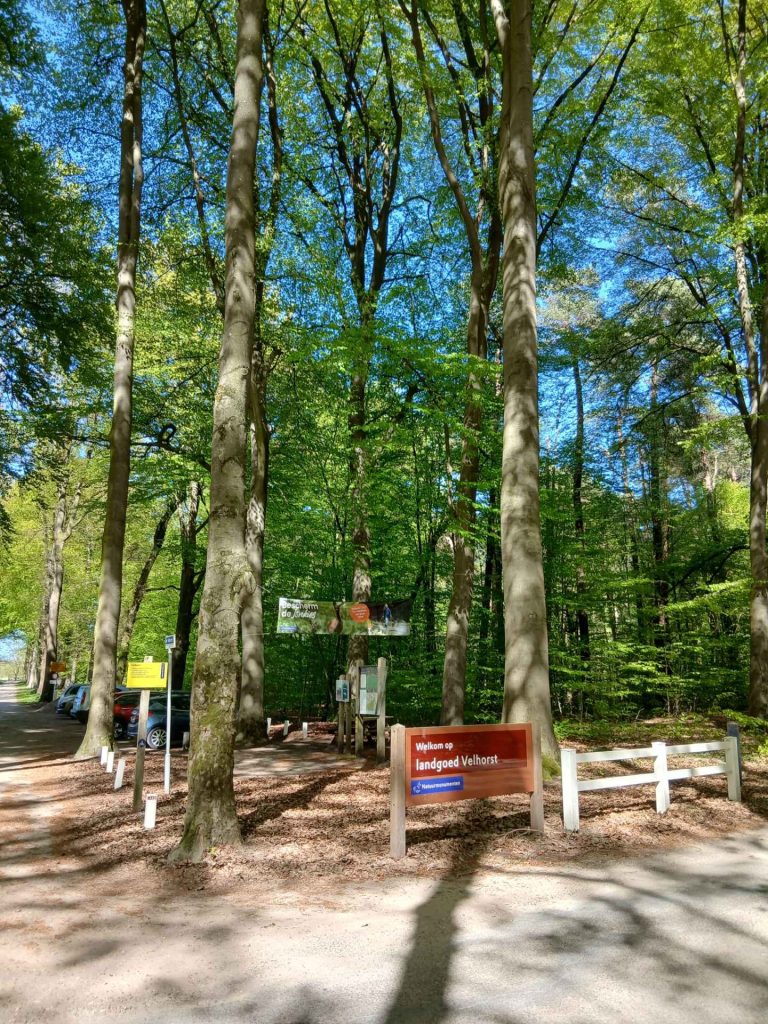
Lageweg car park
Google Maps, Kristallijne Natuurwandeling Velhorst, via the link https://maps.app.goo.gl/AhEk47XWtCnGfbbG9
Once you’ve clicked on the link, you’ll see a map with several pins marked on it. Don’t tap any of them. Scroll straight down and you’ll see a list of numbers. These numbers indicate which nature spot is meant. If you hover over the long coordinator number given for a nature spot and click on it, you’ll get directions there from your current location. To do this, you’ll need to have location services enabled on your mobile.
10 pins placed:
I’m not sure whether the pins placed on Google Maps are as precise as you’re used to with more common routes. Hopefully, they’re accurate enough to give you a good idea of a location. Together with the distances between nature spots, which I’ve also included, I think everyone should be able to follow the route description provided. If anything is unclear or you see room for improvement, please do get in touch with me. Email at edithbertrand@live.nl.
Maps: 1. Lageweg car park
From the Lageweg car park, walk into the woods. Take the path leading directly from the car park itself, not the one where you first have to cross the road.
Maps 2. Nature temple on the left, 2 beech trees on the right, path to the right
A little further on, you see a path to the right. At the entrance to that path, you see two beech trees. These form the first actual nature spot on the Crystalline Nature Walk. Do not walk between the beech trees just yet. First, head to the natural temple located opposite these two beech trees, on the left-hand side of the path you are walking along.
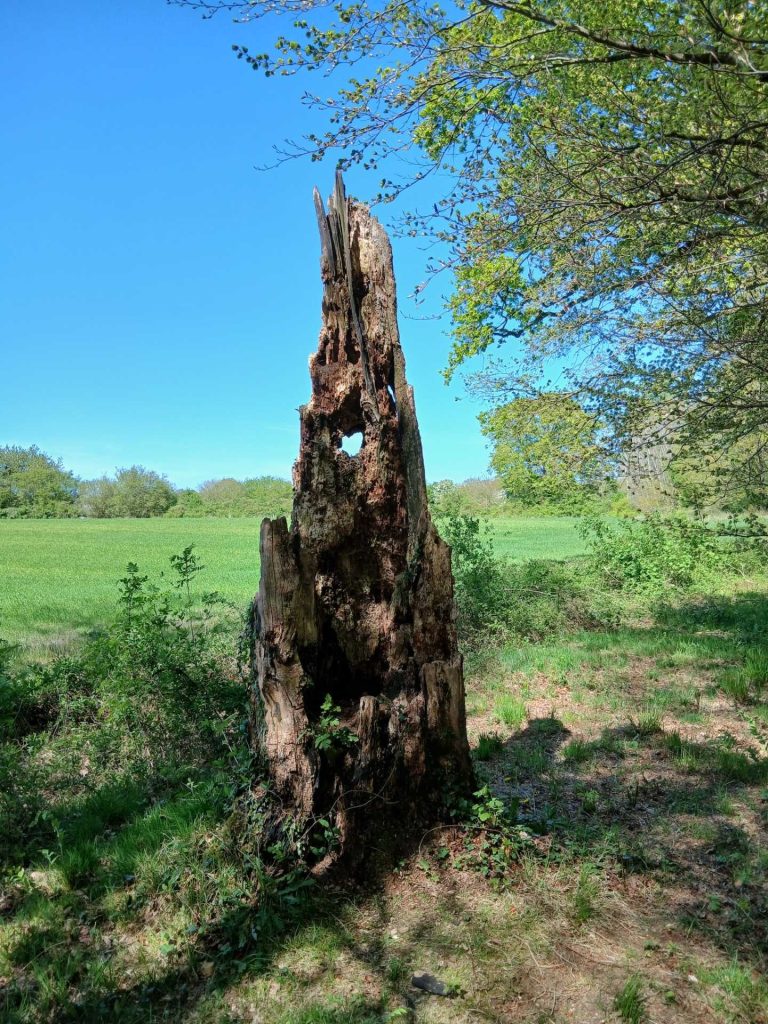
the natural tempel
From the natural temple, walk back a few metres to the path you came from, and stop in front of the two beech trees that mark the entrance to the path you are about to take. Seen from the Lageweg car park, this is the first path on the right.
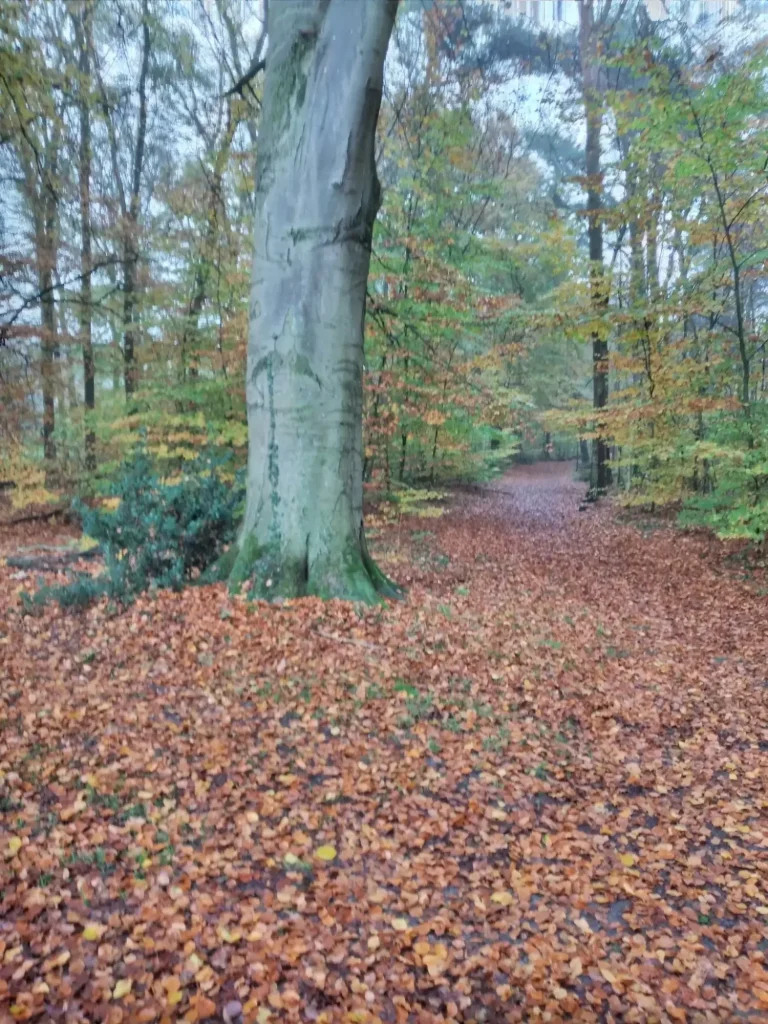
one of the two beeches
The two beeches are in the background.
Distance: from the point between the two beech trees to the three birches: approx. 110 m.
Maps 3. The 3 birches
Walk between the two beech trees and head towards the three birch trees, which stand on the left-hand side of the path. These three birch trees stand right next to the path and are close together. This makes them clearly visible.
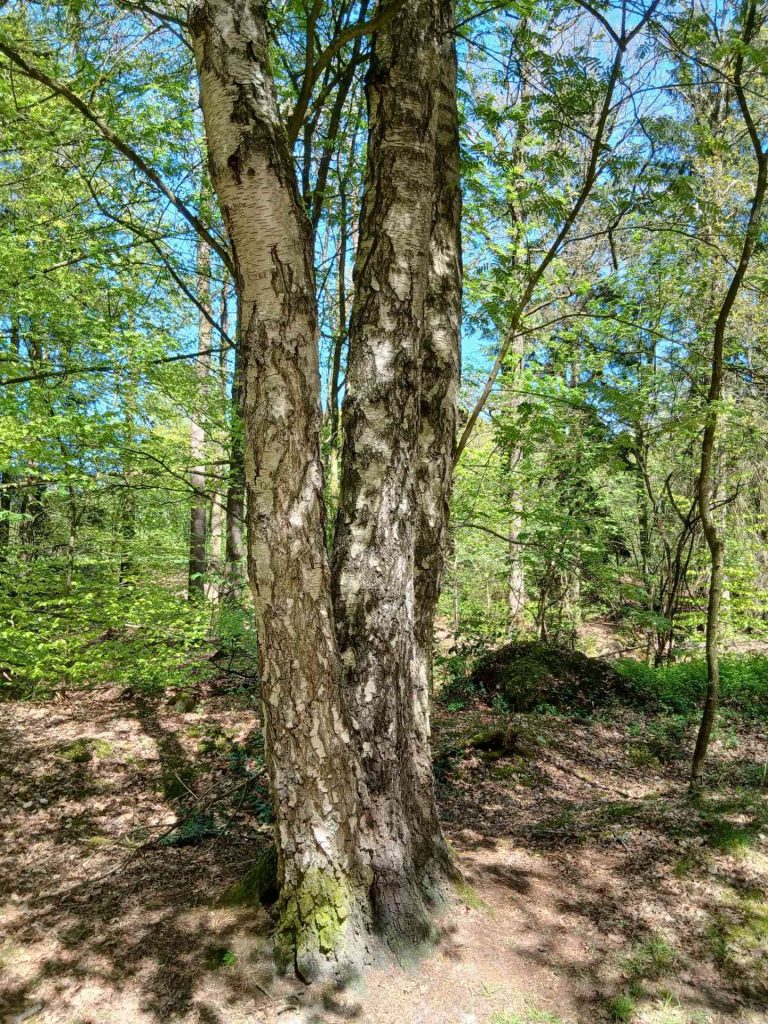
the three birches
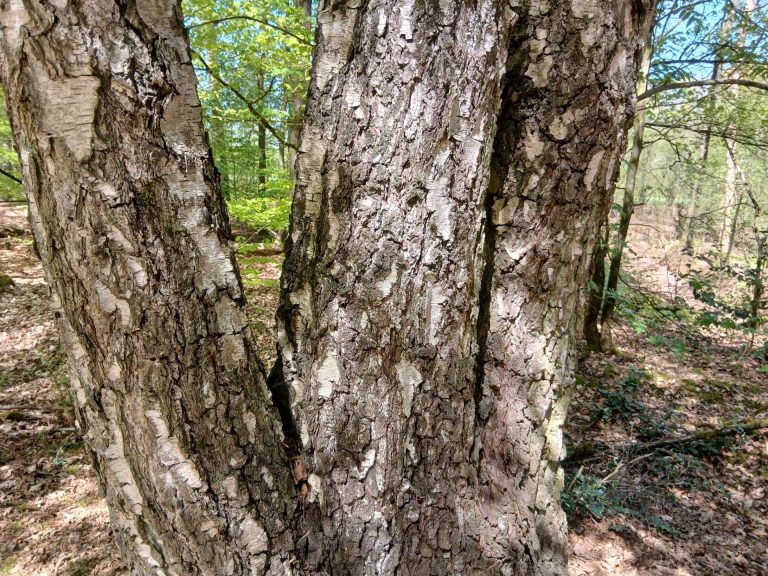
the three birches
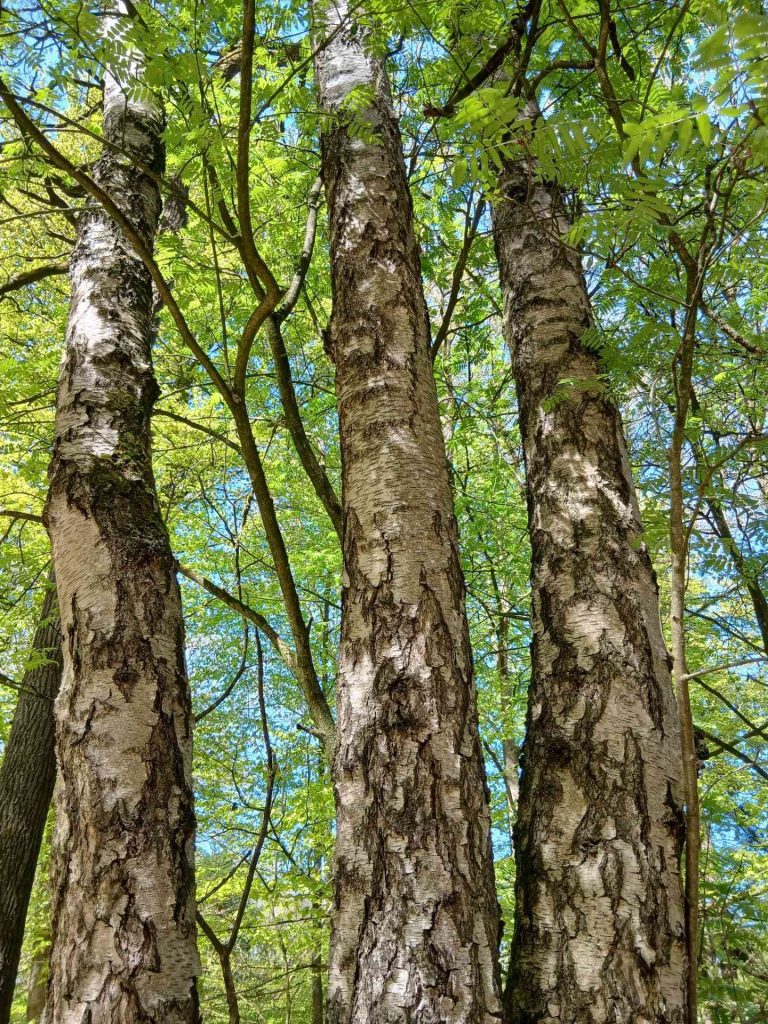
the three birches
Distance: from the three birch trees to the two oak trees: approx. 170 m.
Maps: 4. The 2 oaks, left-hand side
NB Hard to see!
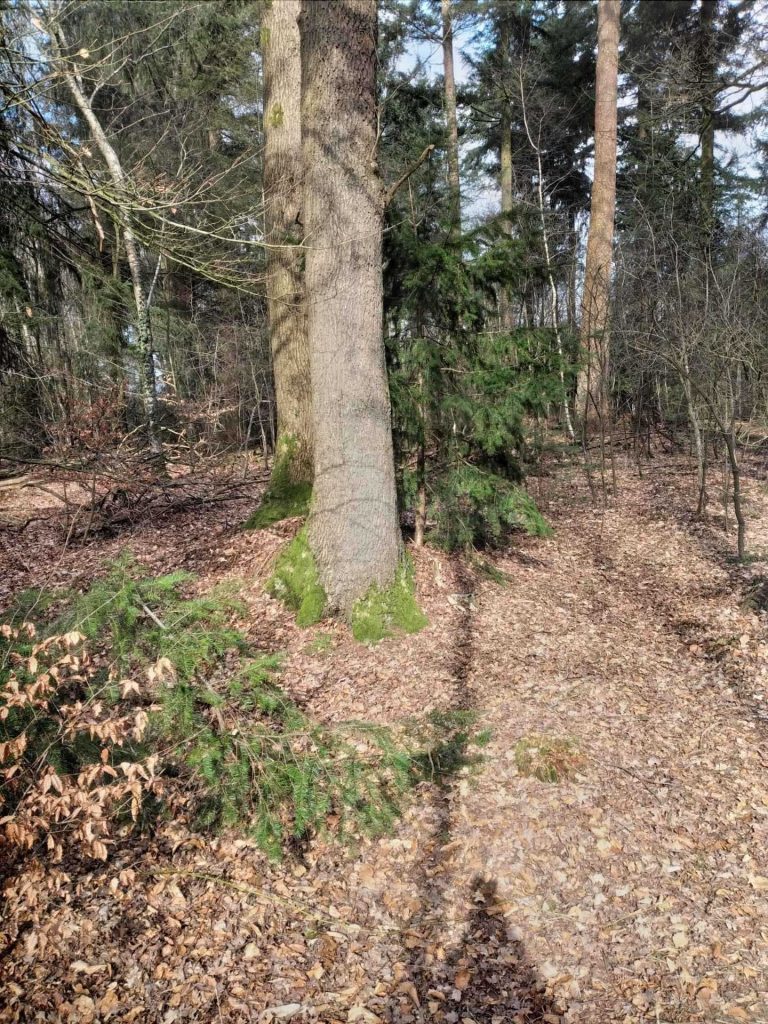
Continue along the path to the two oaks, which stand just a little further from the path on the left-hand side, a few metres away, and which are easy to overlook. A small conifer stands next to them. The three of them are situated slightly higher than the path. This might take a bit of searching. If you stand on the path exactly where the two oaks are on the left-hand side, you will only see one oak because, from that position, they are standing one behind the other. That doesn’t make it any easier. Look out for the small conifer standing next to them. The two oaks haven’t grown together, and you can stand between them if you like, or lie down or hang (together with the ground between them, they form a sort of hammock).
If you cross a small road and haven’t seen them yet, you’ve gone too far. You’ve missed them and need to turn back. The road crossing is about 200 m from the two oaks.
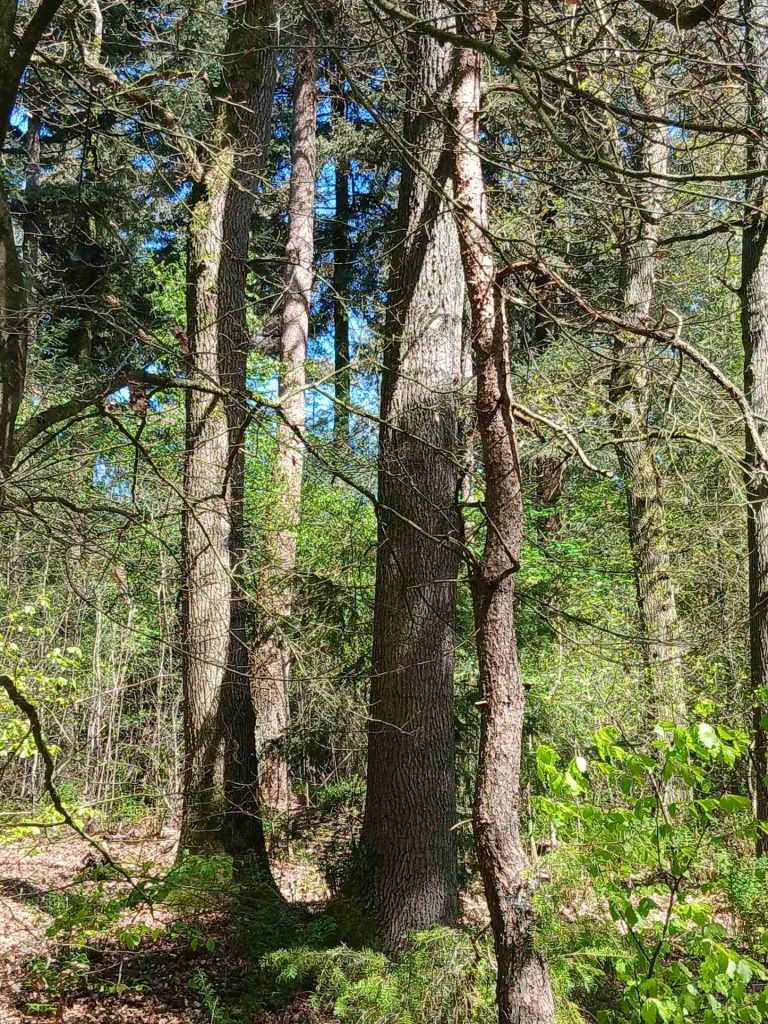
the two oaks
the two oaks
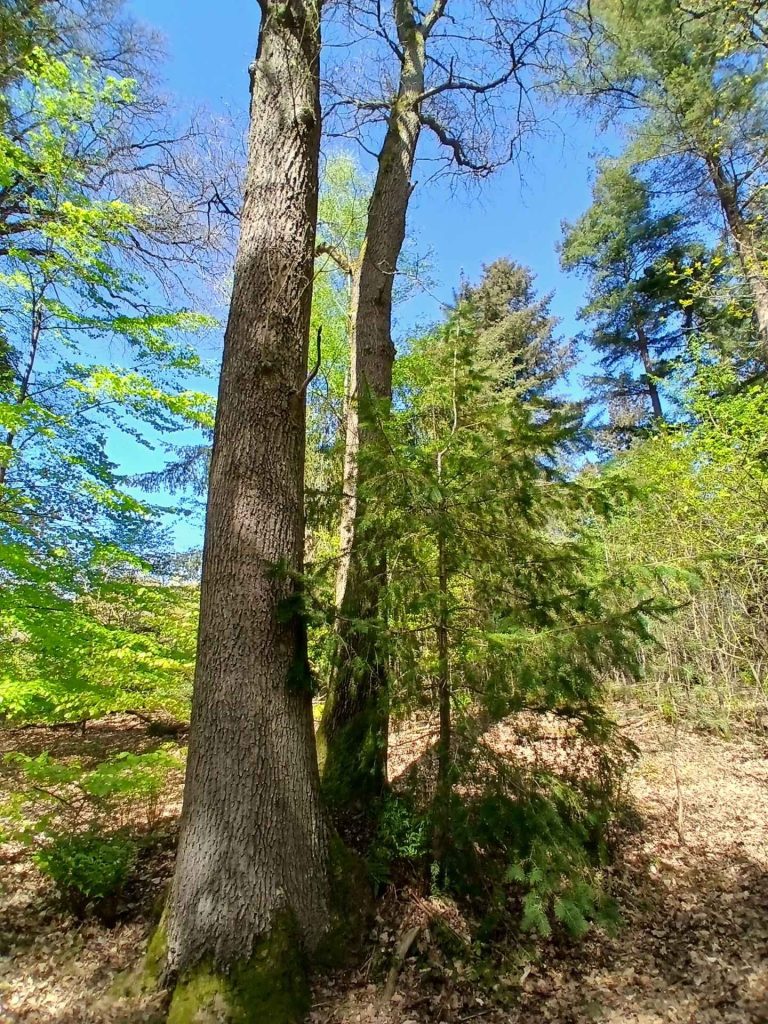
the two oaks
Distance: from the two oaks to the place of recognition of the nature beings: approx. 270–280–290 m.
Maps: 5. Place of nature beings, right-hand side
You walk on from the two oak trees and cross a road after approx. 200 m. The place of recognition of nature beings is on the right-hand side of the path. There are several small clearings amongst the rhododendrons that are suitable for this. From such a spot, you can see a few furrows in the ground running in both directions: towards the path and at right angles to it. If you have these in front of you, you’re in the right place. You have a few options for this.
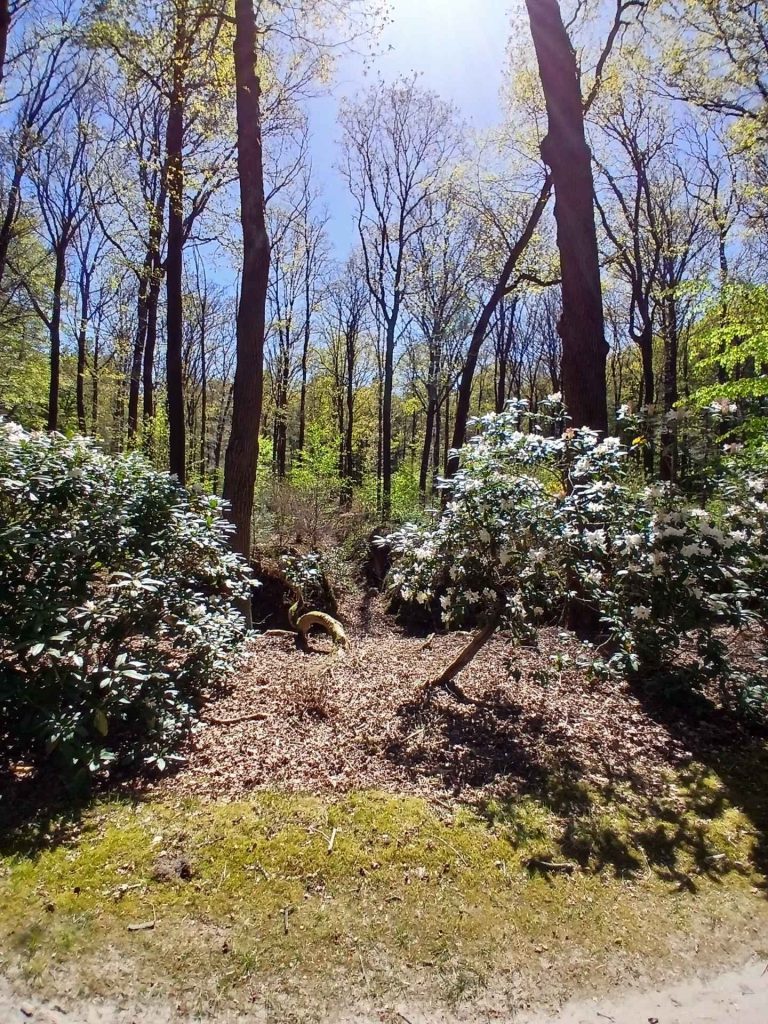
the place of recognition of nature beings
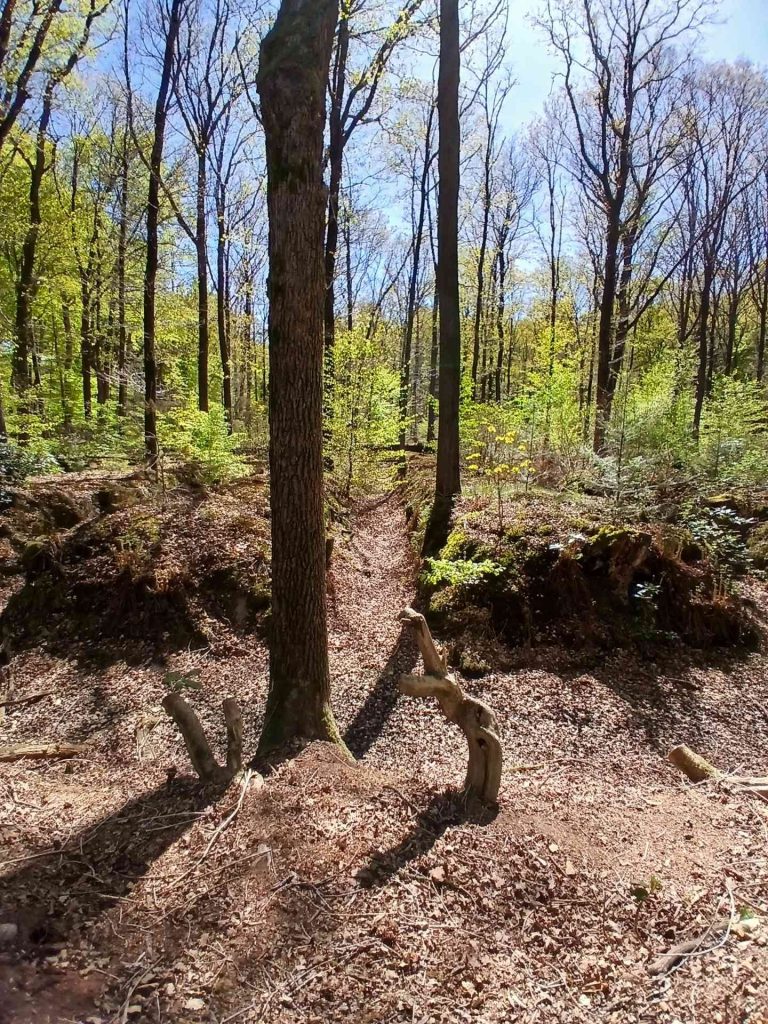
the place of recognition of nature beings
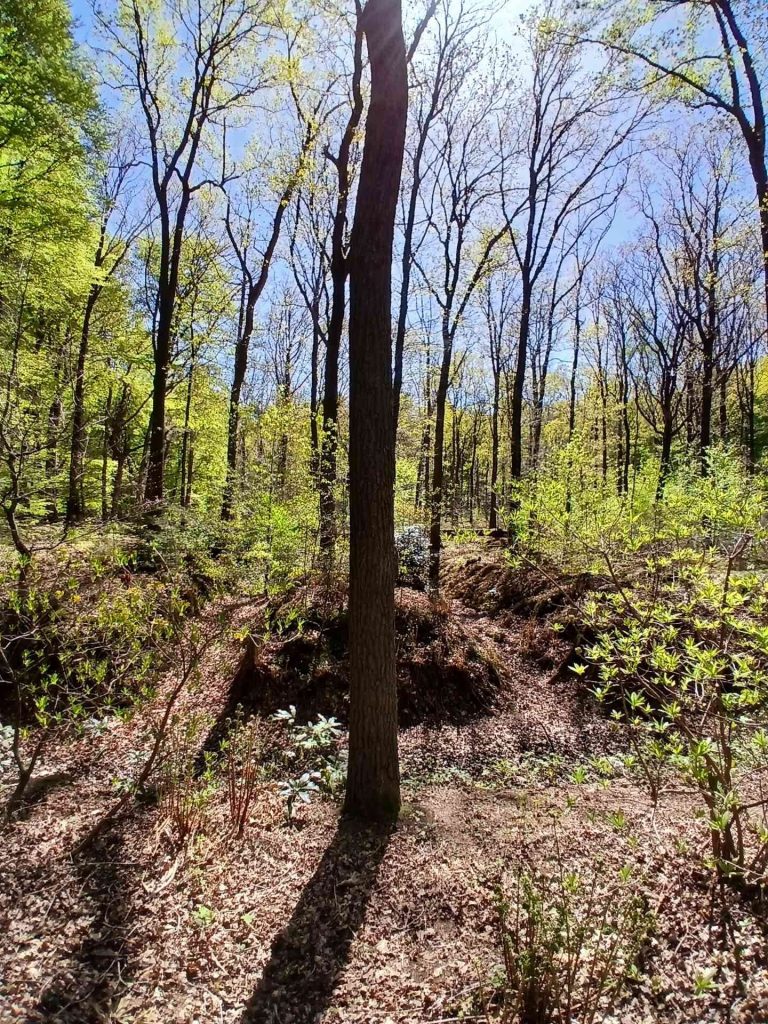
the place of recognition of nature beings
Distance: from the spot of recognition of nature beings (for the measurement, I took the last suitable nook) to the large tree stump: approx. 100 m.
Maps: 6. The tree stump, right-hand side
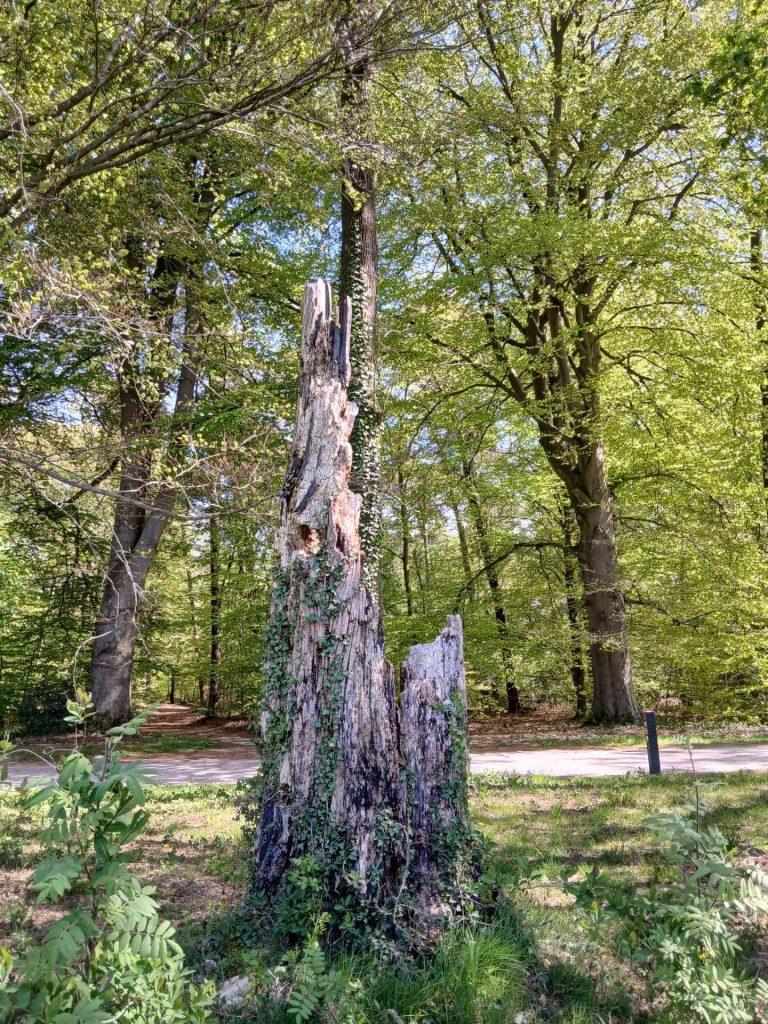
Walk a little further down the path and you will see a large, low tree stump on the right-hand side, right next to the path. That’s the one.
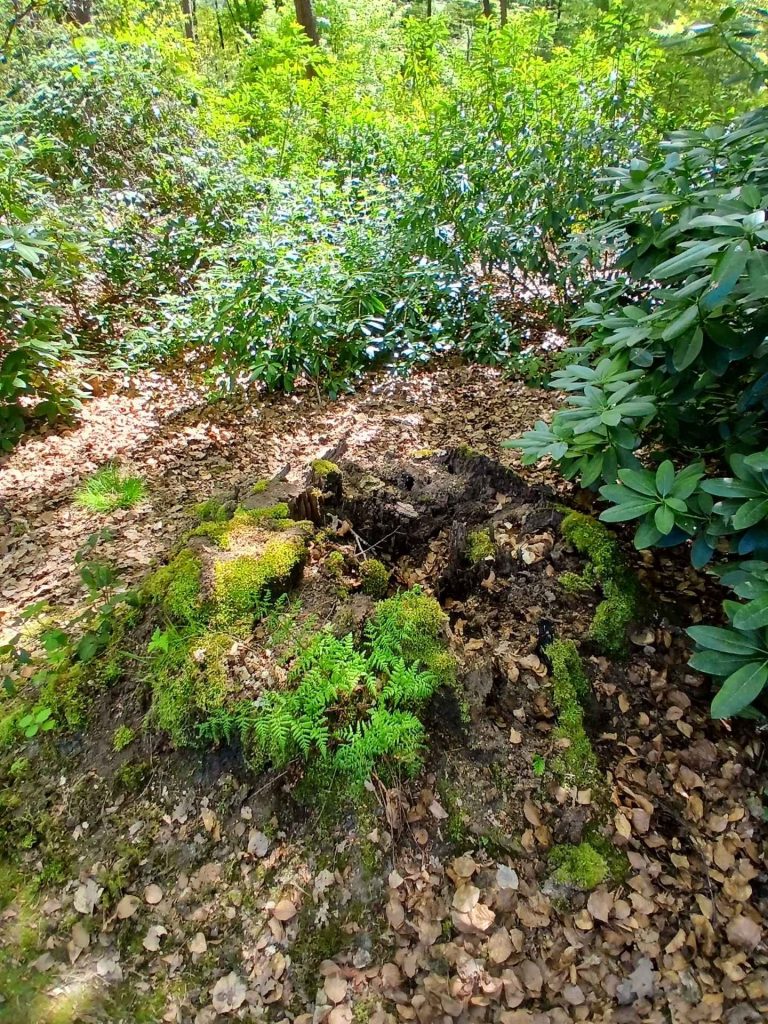
the large tree stump
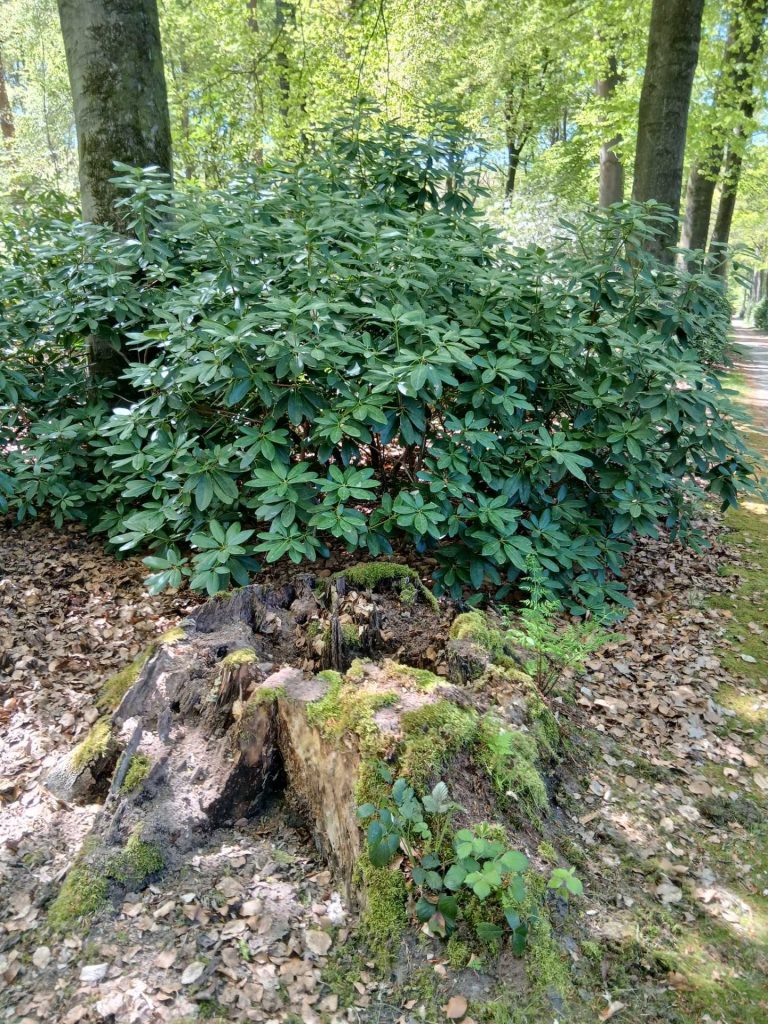
the large tree stump
Distance: from the large tree stump to the entrance to the Gaja point: approx. 410 m.
Maps: 7. Entrance to the Gaja point and the Gaja point (right-hand side)
Continue along the path past the large tree stump.
Turn right at a path that runs diagonally to the right, located approx. 120 m past the large tree stump.
Once you have turned right, you will soon come to a road crossing, which you cross. This is approx. 200 m past the large tree stump.
Continue along the path and at some point you will come across a path to the left which you do not take, but which does provide a useful landmark. That path to the left, which you do not take, is located approx. 360 m past the large tree stump. From this point, walk straight ahead, immediately up the small slope where the path to the Gaja point begins. That is why the path to the left is so useful: it helps you identify which slope is meant.
From the start of the path to the Gaga point – that is, at the top of the small hill – the new measurement in metres to the spruce labe begins.
The passage to the Gaja point is formed by the top of the small hill and the path until you have descended the slope.
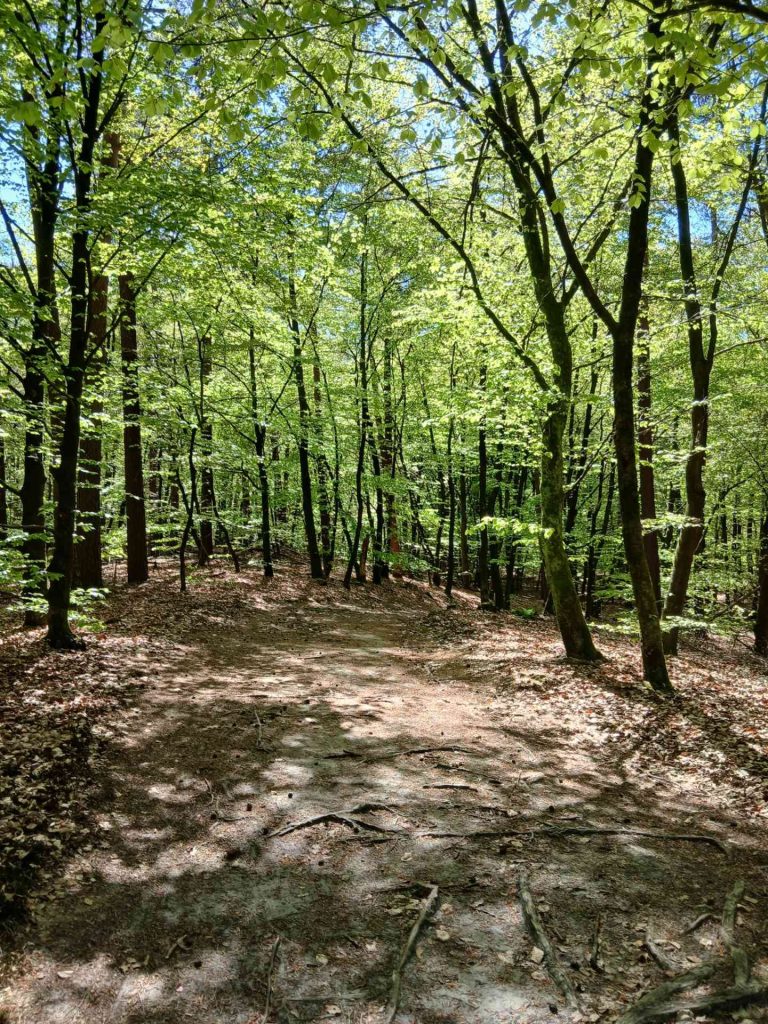
the entrance to the Gaja point
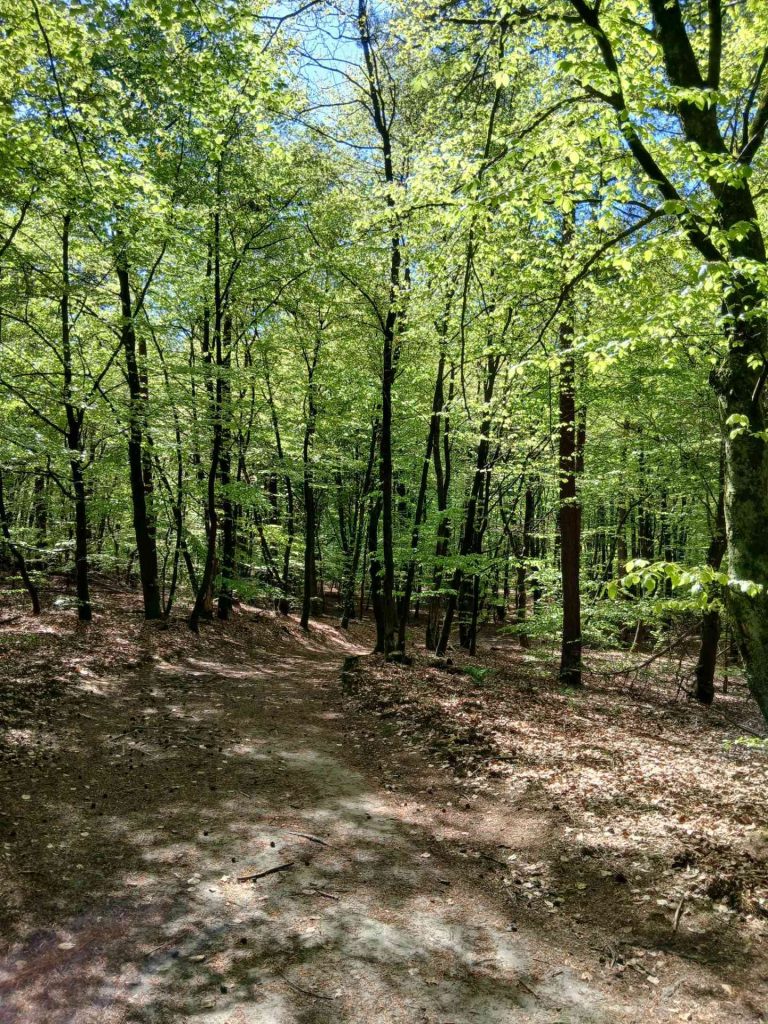
the entrance to the Gaja point
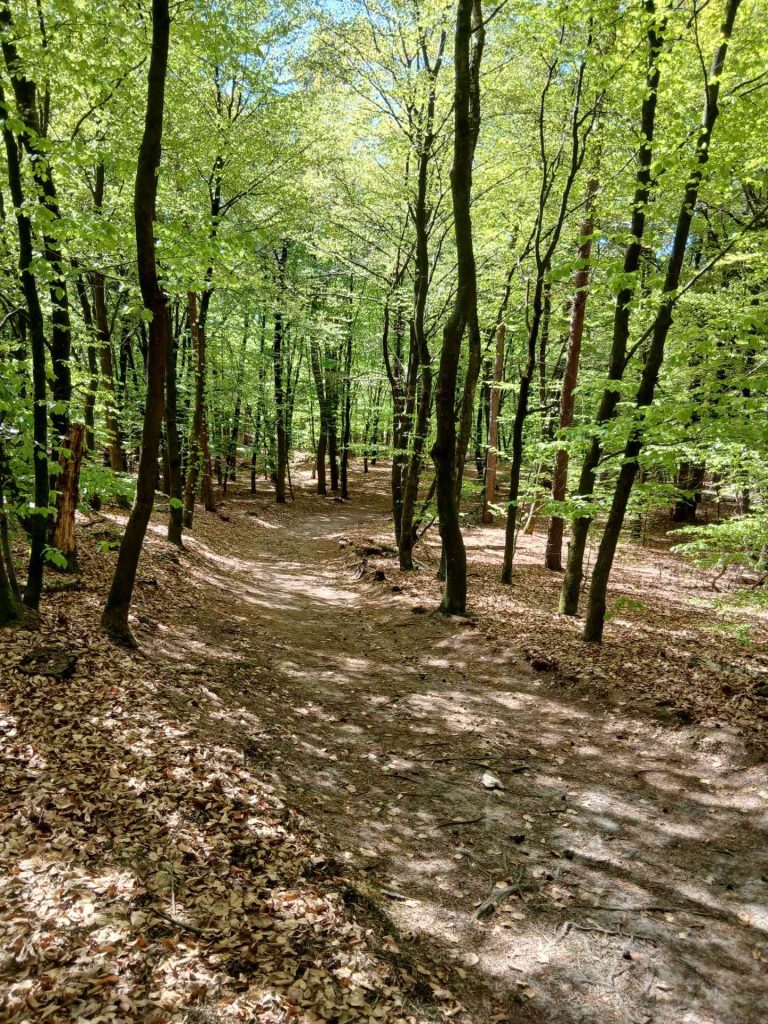
the entrance to the Gaja point
Distance: from the start of the passage to the Gaja point itself: approx. 30 m.
At the bottom of the small hill and the patch of ground to its right is the Gaja point.
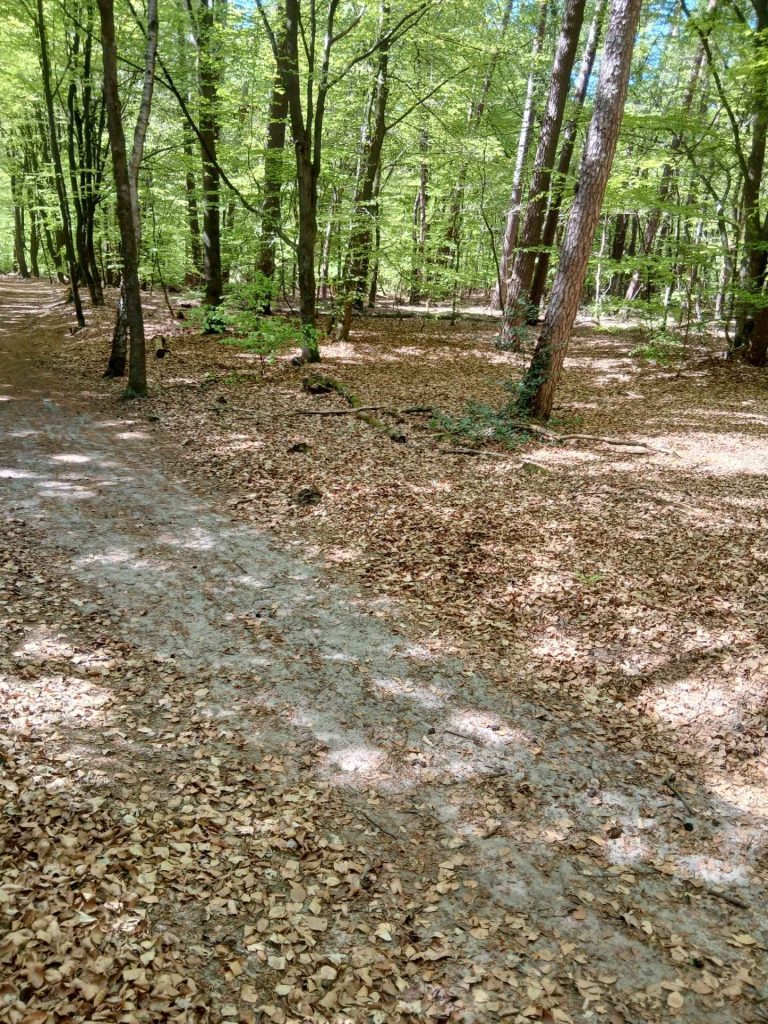
the Gaja point
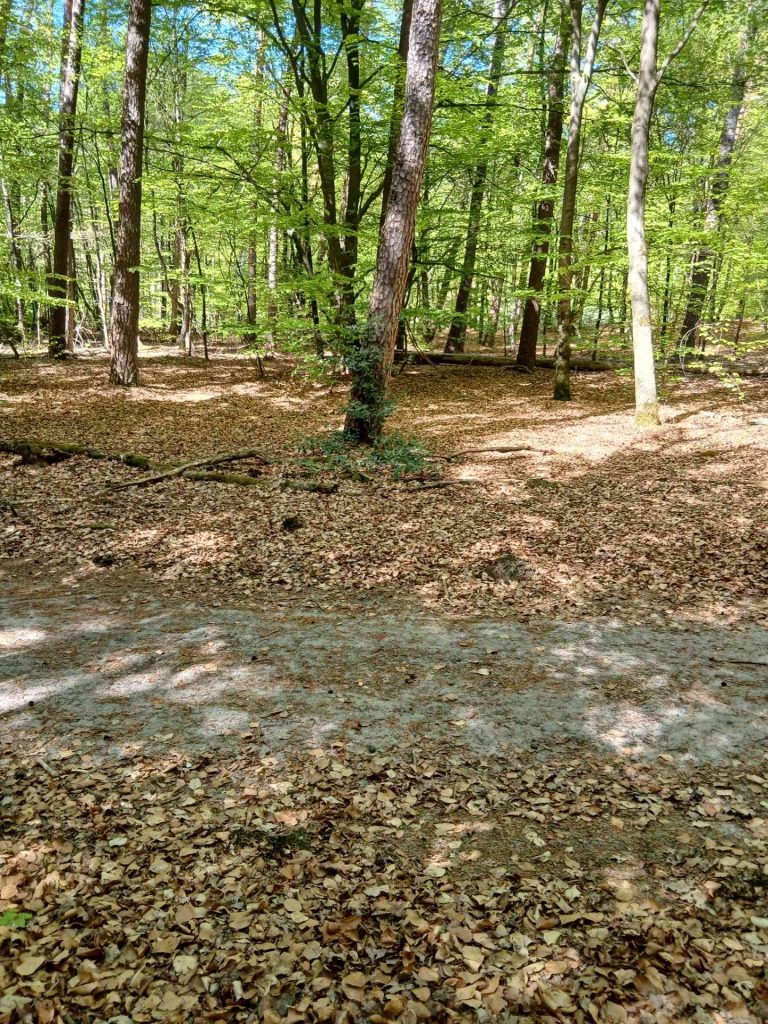
the Gaja point
Distance: from the start of the passage to the spot where you prepare for the spruce lane: approx. 560 m.
Maps: 8. Preparation for the spruce lane, spruce lane and gate on the spruce lane at the left turn
After the Gaja point, continue along the route. Turn left at the first path on the left. This is located approximately 60 m from the start of the passage.
Then turn right at a junction, which is also the first path on the right. This is located approximately 330–340 m from the start of the passage.
If you carry on walking for a short while, you will eventually see the spruce lane ahead of you, which runs at right angles to the path you are on. Before you turn onto the spruce lane, prepare yourself and read the text next to it. So you don’t do this on the spruce avenue itself, but just before it. The instructions explain why this is the case.
On the spruce lane itself, find yourself a spot.
As you continue, looking from the path you came from, you turn right onto the spruce lane. So as you continue, looking from the spot where you prepared, you turn right. A little further on, there is a path to the left. (If you were to walk straight on, you would come out at a small car park.) At the entrance to that path there are two trees that form the boundary of spruce lane. Not an entrance gate, but a boundary gate. I call that spot the gate at spruce lane.
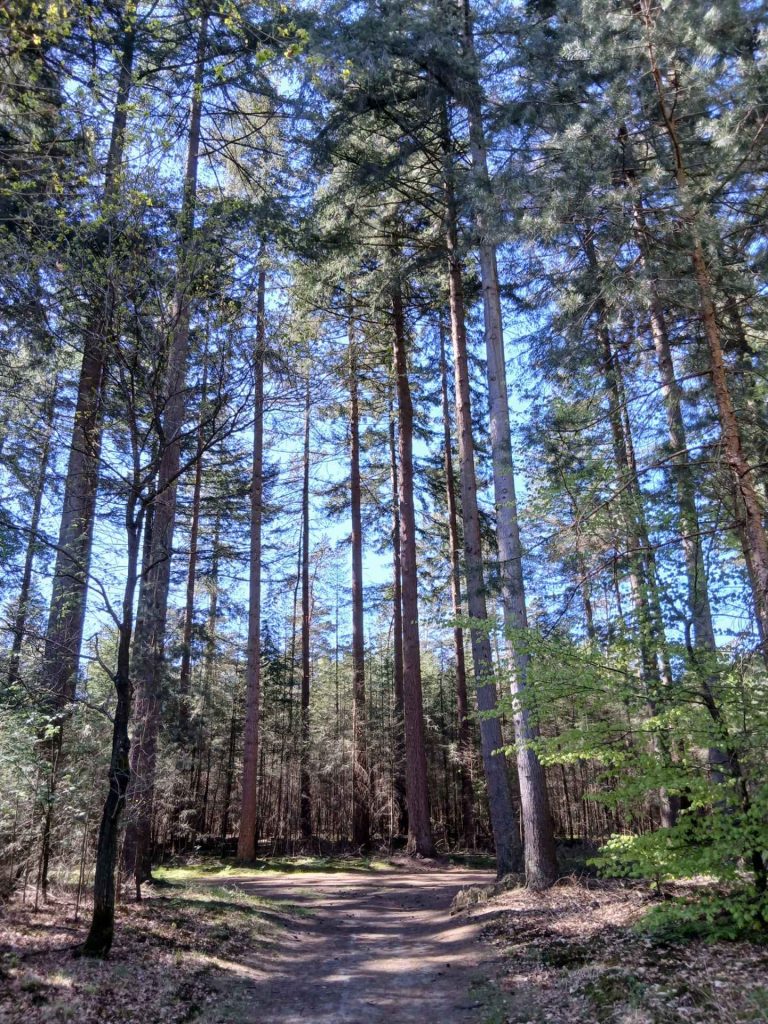
preparation spruce lane
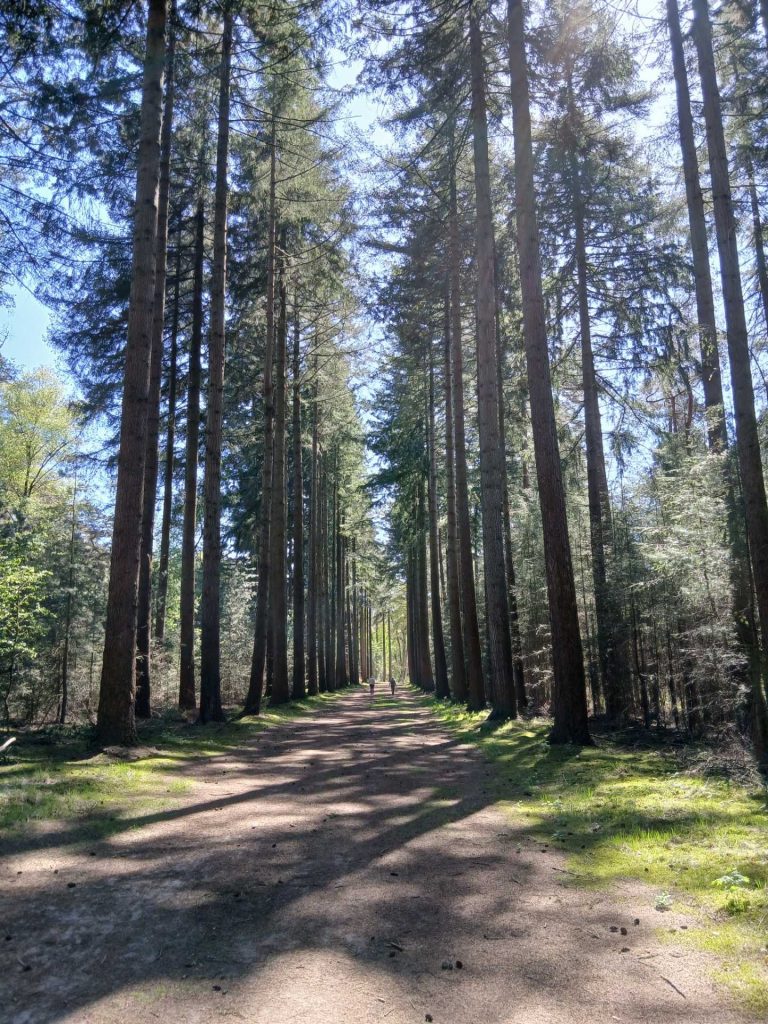
the spruce lane
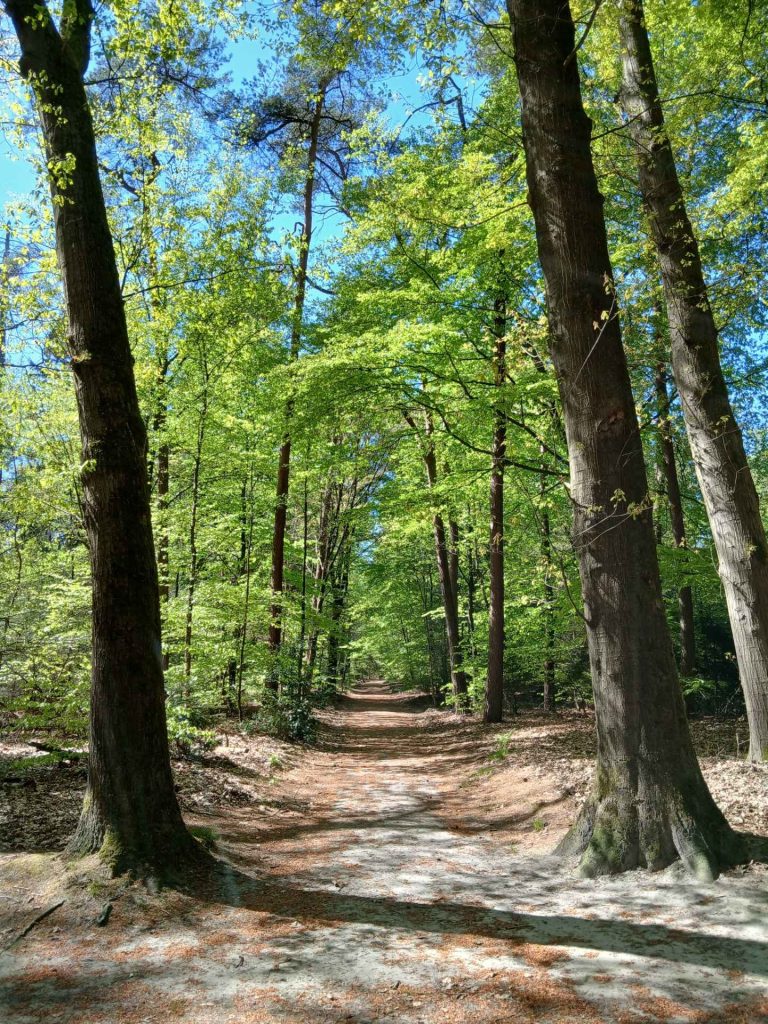
gate at the spruce lane
Distance: from the gate at the spruce lane to the juniper bushes: approx. 440 m.
Maps: 9. Juniper bushes on the left, then the burning place on the left, then a turn to the right
It might not be immediately obvious, but once explained, you can’t miss it.
Continue along the path after passing through the gate at the spruce lane. After about 110–120 m, the path bends to the left. A little further on, you’ll go through a gate, which is located about 290 m from the gate on the spruce lane.
The juniper bushes you pass on the Velhorst Crystalline Nature Walk are on the left-hand side of the path, about 440 m from the gate of the spruce lane. I’m not sure exactly how to explain it to you. There are quite a few bushes grouped together, which are the ones you’re looking for, and beyond that it’s a bit more bare. And there’s now a small bench to the left of the juniper bushes, so before the juniper bushes as you walk past. It looks as though someone once lit a fire there. That’s the situation now; I don’t know if it will stay that way.
But even if you don’t spot the juniper bushes straight away, or if you’re unsure, that’s no problem. Because after the juniper bushes is the burning place, and immediately after that you come to a T-junction. If you walk back from the T-junction, you’ll see the burning place to your right and the juniper bushes after that, also on the right-hand side.
You can’t miss it.
The new measurement to the large beech tree starts from the juniper bushes.
The burning place is located about 40 metres past the juniper bushes, also on the left-hand side of the path.
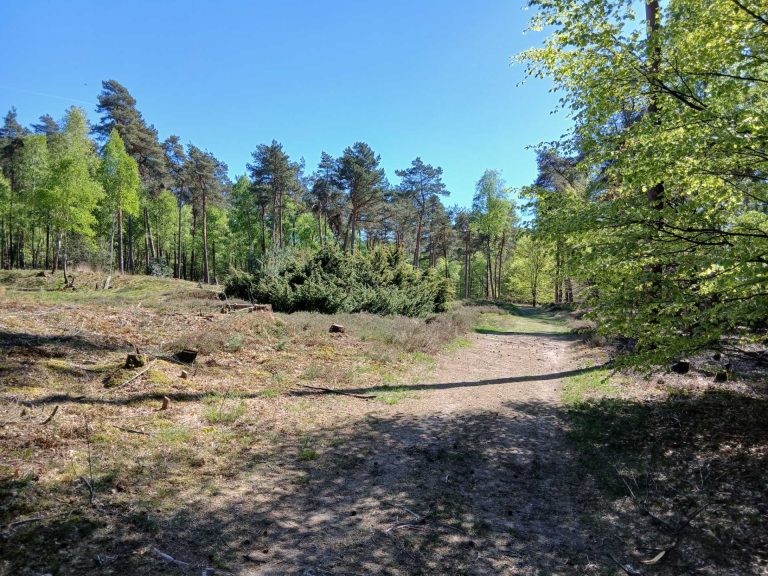
The group of bushes to the left of the path are the juniper bushes.
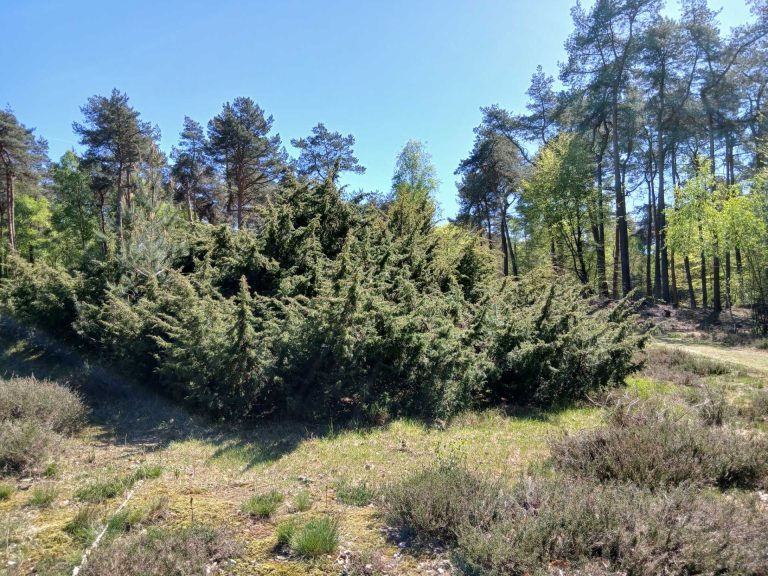
the juniper bushes
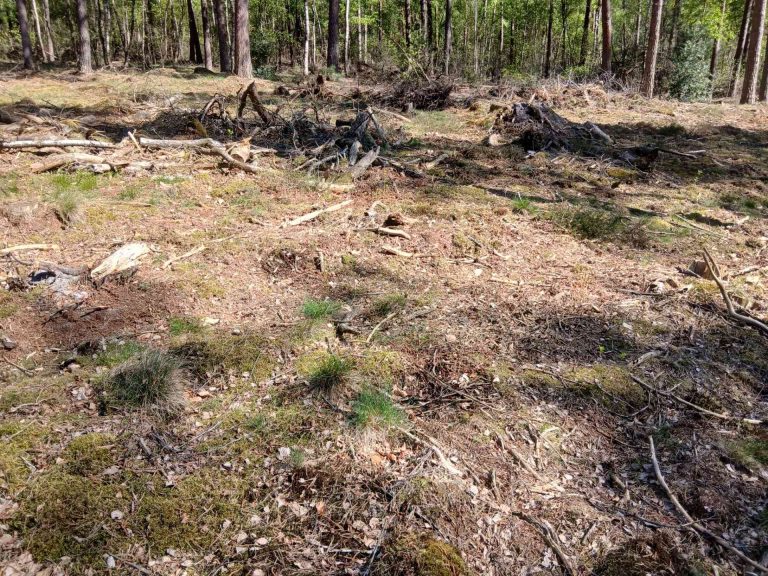
the burning place
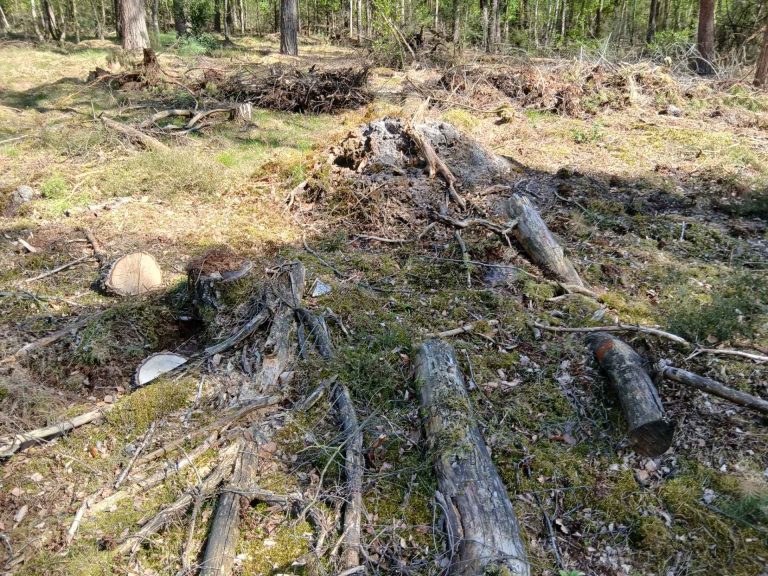
the burning place
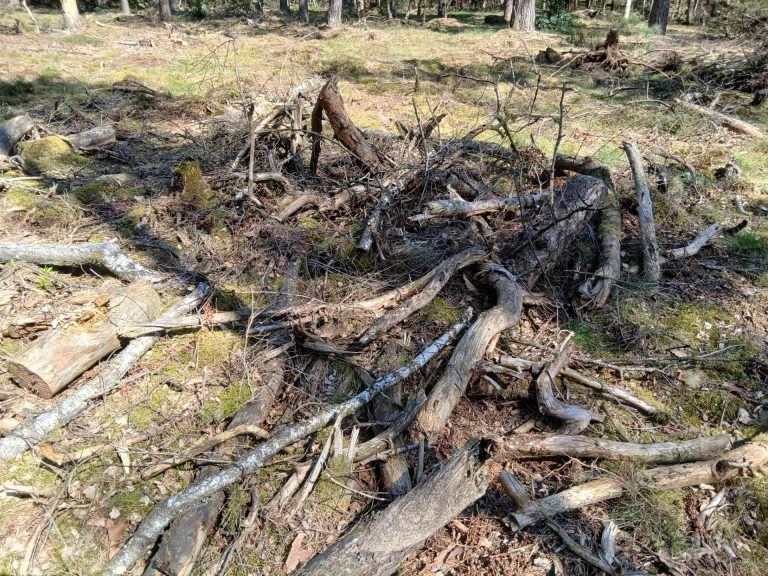
the burning place
Distance: from the juniper bushes to the large beech tree: approx. 280 m.
Maps: 10. Large beech tree on the left
Hard to see itself, but with a fairly clear landmark.
After the burnt area, carry on walking.
You will then very quickly come to a T-junction, about 120 m from the juniper bushes. Turn right there.
About 280 m after the juniper bushes, you will see two groups of juniper bushes on the right-hand side of the path, with a tall oak tree between them. This oak tree stands against the group of juniper bushes bordering the path. The other group of juniper bushes stands slightly apart from it.
Once you have found this spot, you will also find the large beech tree. Opposite it, on the left-hand side of the path, stands the large beech tree. If it is not covered in leaves, you can see it. It stands a few metres from the path and has large, low-hanging branches. In summer, all you can see from the path are leaves.
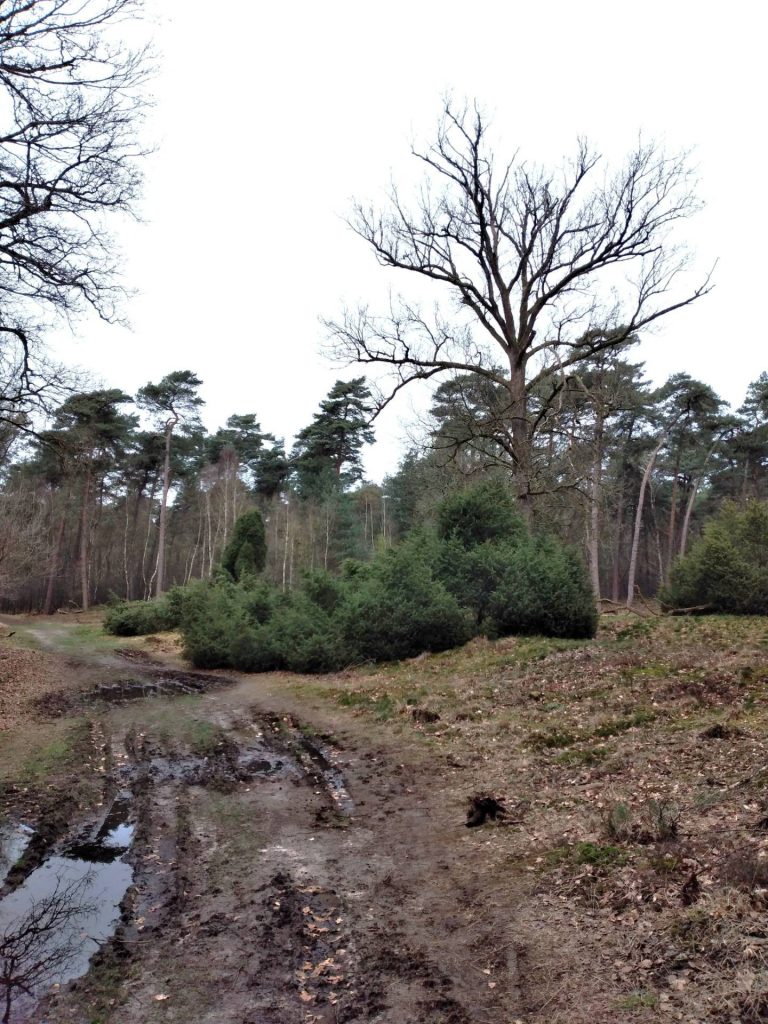
the oak with two groups of juniper bushes (the right one barely visible) opposite the spot where the large beech stands
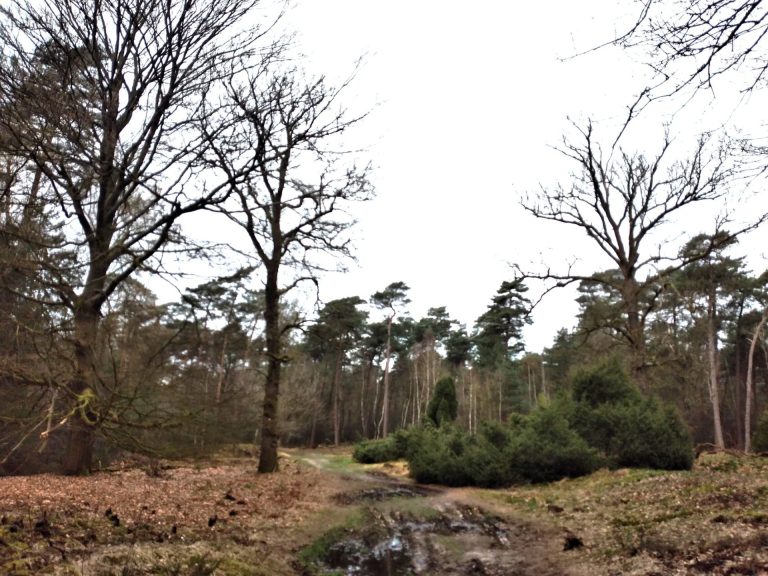
the oak with a group of juniper bushes and the large beech (the leftmost tree)
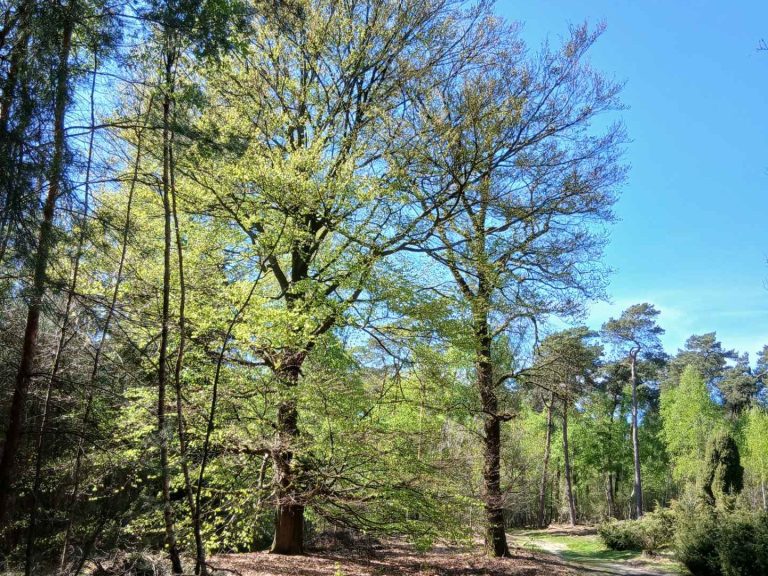
the large beech with still a few juniper bushes opposite the path
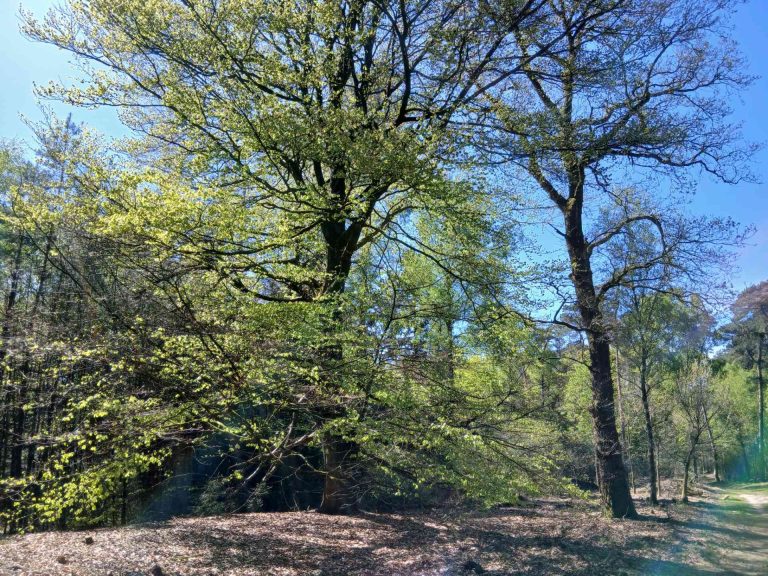
the large beech tree
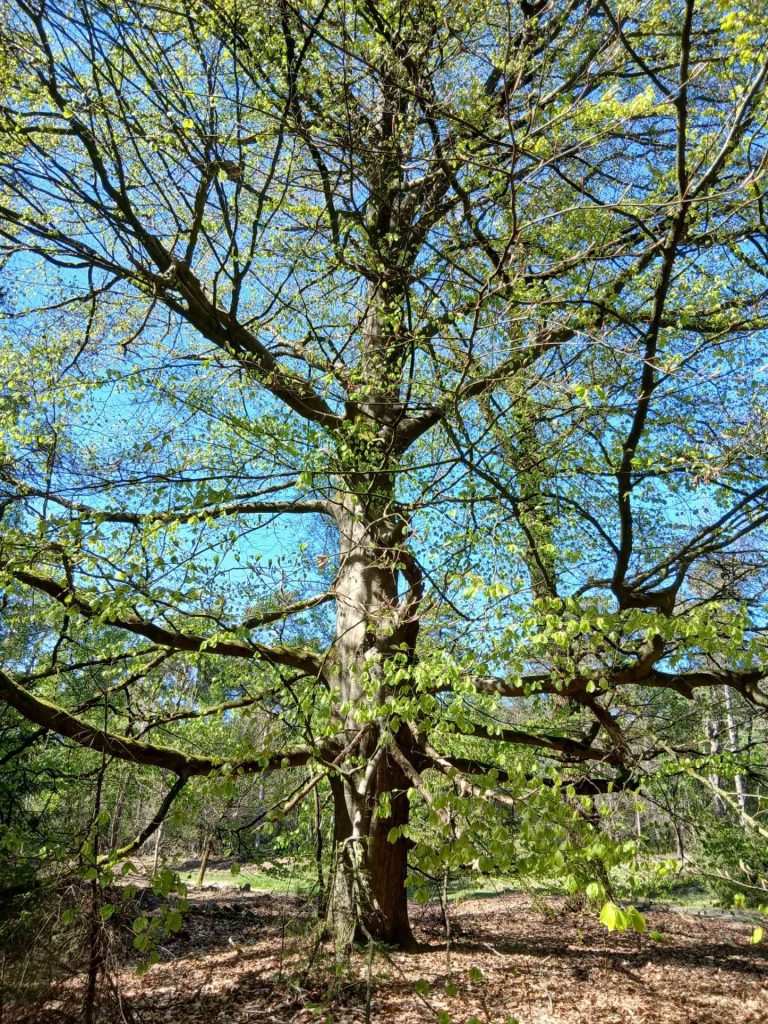
the large beech tree
Distance: from the large beech tree to the point where you can already see the car park: approx. 700 m.
From the large beech tree, continue along the path. A little further on, a path joins from the left; keep to the right. Almost immediately after that, you’ll see a gate which you pass through. Continue straight ahead.
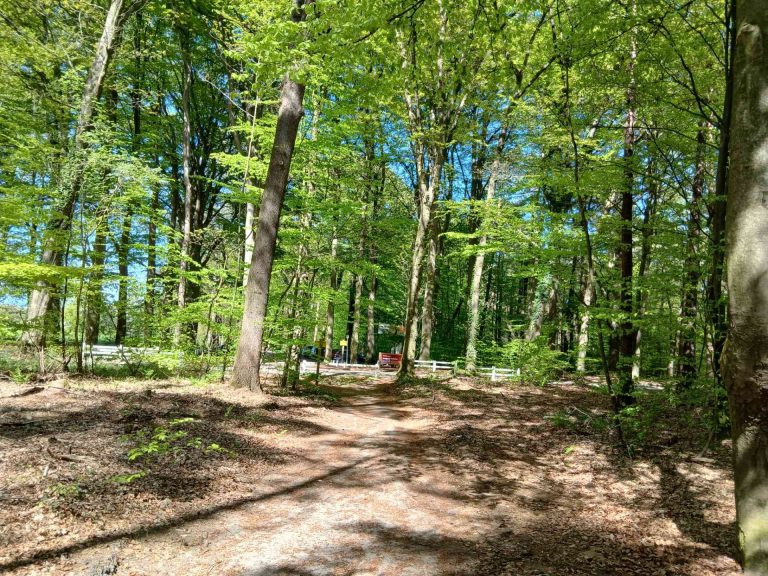
Lageweg car park in sight
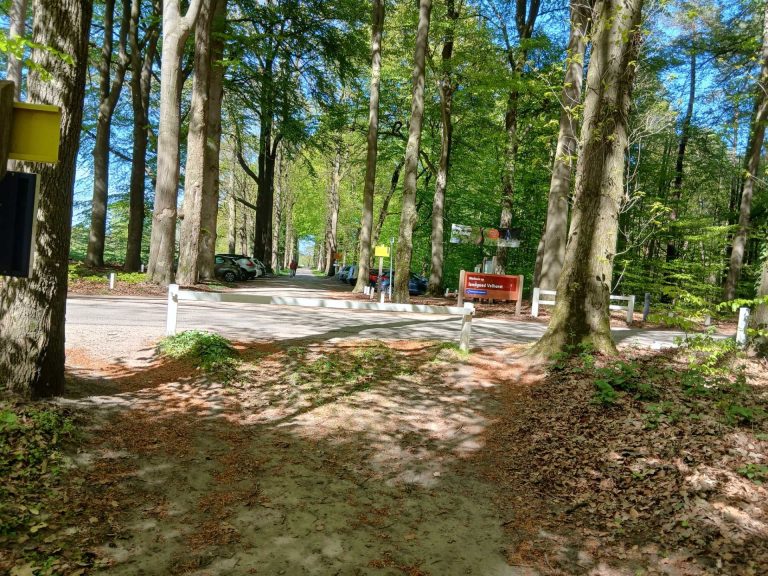
Lageweg car park
We hebben je toestemming nodig om de vertalingen te laden
Om de inhoud van de website te vertalen gebruiken we een externe dienstverlener, die mogelijk gegevens over je activiteiten verzamelt. Lees het privacybeleid van de dienst en accepteer dit, om de vertalingen te bekijken.